Indo-Western fashion brings together the heritage of Indian clothing with contemporary Western silhouettes, tailoring and styling. Instead of following a completely traditional or Western aesthetic, this fashion category combines elements such as Indian textiles, embroidery, draping and craftsmanship with trousers, blazers, dresses, co-ords, capes and modern cuts.
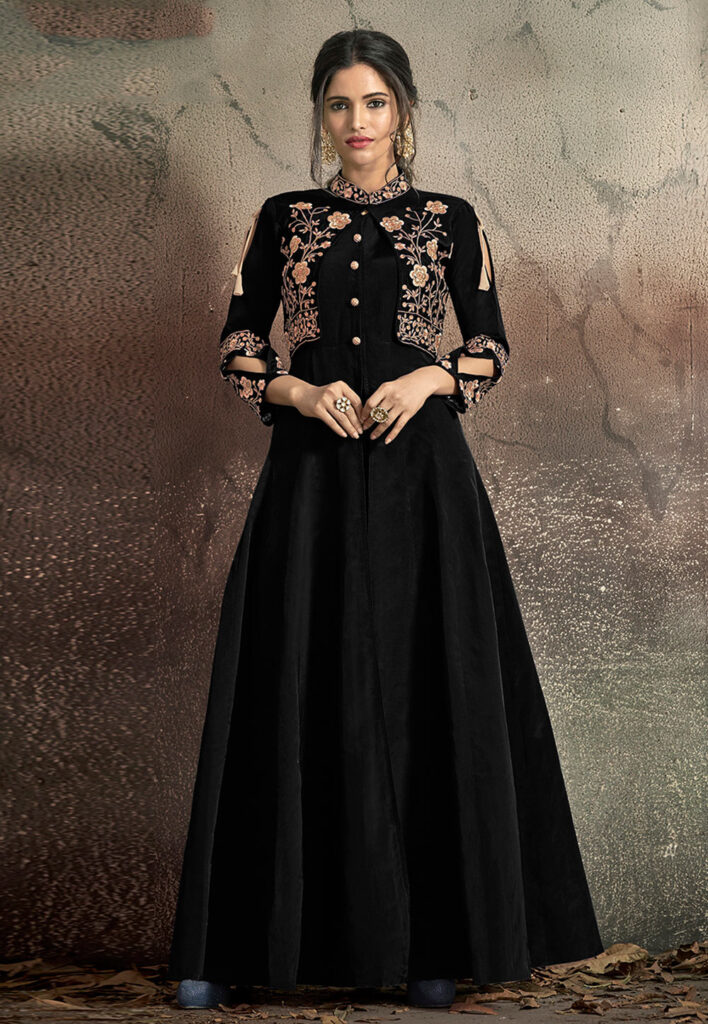
In 2026, the style is becoming more versatile and wearable. Traditional fabrics such as Banarasi, Chanderi and Ikat are increasingly being interpreted through contemporary shapes, while saree gowns, cape sets, jacket lehengas, dhoti pants and coordinated separates continue to offer modern alternatives to conventional occasion wear.
The result is a style that retains an Indian identity while fitting naturally into contemporary wardrobes.
What Is Indo-Western Fashion?
Indo-Western fashion is a form of Indian-Western fusion clothing that combines Indian design elements with modern silhouettes and construction.
The Indian influence can come from:
- Heritage textiles
- Traditional embroidery
- Indian prints
- Saree-inspired draping
- Kurta and lehenga silhouettes
- Dhoti-inspired shapes
- Handcrafted details
- Regional textile traditions
The contemporary influence can include:
- Tailored trousers
- Blazers
- Dresses
- Jumpsuits
- Co-ord sets
- Cropped tops
- Capes
- Structured jackets
- Asymmetric cuts
- Modern layering
The defining characteristic is integration rather than simple combination. A contemporary outfit can use an Indian textile, an Indian silhouette or traditional craftsmanship while being constructed for a modern wardrobe.
Indian Fashion Meets Western Silhouettes
The growth of fusion dressing has changed how traditional Indian clothing is designed and styled.
A saree no longer has to appear only as a conventional drape. It can become a pre-draped garment or gown. A lehenga can be paired with a tailored jacket. A traditional textile can become a blazer, shirt or coordinated trouser set.
This approach makes heritage clothing more adaptable to different lifestyles and occasions.
For example:
| Indian influence | Contemporary interpretation |
|---|---|
| Banarasi silk | Tailored blazer or co-ord |
| Chanderi | Contemporary dress or lightweight jacket |
| Ikat | Shirt, trousers or modern co-ord |
| Saree drape | Pre-draped gown |
| Lehenga | Jacket or cape ensemble |
| Dhoti | Contemporary trouser silhouette |
| Kurta | Shirt, tunic or dress |
This blending of heritage and contemporary construction is one of the defining characteristics of modern Indian fashion.
Indo-Western Fashion Trends for 2026
The 2026 direction is moving beyond the traditional kurti-and-jeans combination. Designers and brands are increasingly experimenting with modern construction, practical silhouettes and heritage textiles.
Saree Gowns
The saree gown combines the visual character of a saree with the construction of a contemporary gown.
It offers the appearance of a draped garment while providing the structure and convenience of a single-piece outfit.
Saree gowns are particularly suited to:
- Wedding receptions
- Cocktail parties
- Evening celebrations
- Formal events
- Destination weddings
Cape Sets
Capes add movement and layering to fusion dressing without making an outfit excessively traditional.
They can be worn with:
- Trousers
- Skirts
- Lehengas
- Dhoti pants
- Straight pants
An embroidered cape over a contemporary bottom is a simple way to combine Indian craftsmanship with modern proportions.
Jacket Lehengas
The jacket lehenga replaces or complements the conventional blouse and dupatta with a structured outer layer.
This creates a more tailored appearance while retaining the familiar lehenga silhouette.
It works particularly well for:
- Sangeet celebrations
- Wedding receptions
- Festive events
- Evening functions
Dhoti-Pant Sets
The dhoti silhouette brings a distinctly Indian design element into contemporary dressing.
Modern versions can be paired with:
- Crop tops
- Tailored jackets
- Capes
- Bustiers
- Structured shirts
The combination creates a relaxed yet sophisticated alternative to conventional ethnic sets.
Indian-Textile Co-Ords
Co-ordinated sets have become an effective way to bring traditional textiles into everyday wardrobes.
A printed or woven Indian textile can be used for a contemporary shirt-and-trouser set, jacket-and-pant combination or skirt co-ord.
This approach also makes heritage fabrics easier to style separately, increasing their versatility.
Fabrics That Define Modern Fusion Style
Fabric plays an important role because it can immediately establish an Indian identity even when the silhouette is contemporary.
Banarasi Silk
Known for its rich weaving and metallic motifs, Banarasi works particularly well for:
- Jackets
- Skirts
- Blazers
- Co-ords
- Evening separates
Using the textile in an unexpected silhouette can make a traditional material feel contemporary.
Chanderi
Chanderi is lightweight and known for its subtle texture and sheen.
It works well for:
- Summer dresses
- Tunics
- Shirts
- Jackets
- Lightweight festive clothing
Ikat
Ikat’s distinctive geometric patterns make it naturally suited to modern silhouettes.
It can be used for:
- Shirts
- Dresses
- Trousers
- Jackets
- Co-ordinated sets
Linen
Linen offers a minimalist approach to fusion dressing.
It works particularly well for:
- Office wear
- Casual clothing
- Summer outfits
- Relaxed tailoring
Organza
Organza adds volume and transparency without making a silhouette feel heavy.
It is especially effective for:
- Capes
- Sleeves
- Overlays
- Festive garments
- Evening wear
The continued interest in Indian handloom and heritage textiles is an important part of the 2026 fashion landscape, with fabrics such as Chanderi, Ikat, linen and Banarasi being adapted for contemporary clothing.
How to Style Indo-Western Outfits
Successful fusion styling usually depends on balance.
If the garment contains heavy embroidery or a highly decorative textile, a cleaner silhouette and minimal accessories can keep the look contemporary.
If the clothing is relatively simple, Indian jewellery, embroidery or handcrafted accessories can provide the cultural detail.
Some easy combinations include:
- Kurti with tailored trousers
- Kurta with denim
- Saree with a structured blazer
- Lehenga with a contemporary jacket
- Dhoti pants with a crop top
- Indian-print shirt with wide-leg trousers
- Embroidered jacket with a minimalist dress
- Banarasi co-ord with contemporary accessories
- Chanderi tunic with straight pants
- Saree gown with modern heels
The goal is not to make every part of an outfit equally traditional. A stronger look often comes from allowing one element to dominate while the remaining pieces provide contrast.
Indo-Western Fashion for Different Occasions
One reason fusion clothing remains relevant is its flexibility.
Office Wear
For professional environments, choose restrained colours, clean tailoring and lightweight Indian textiles.
Good combinations include:
- Handloom shirt with tailored trousers
- Minimal kurta with wide-leg pants
- Indian-textile blazer with neutral trousers
- Chanderi tunic with straight pants
Casual Wear
For everyday dressing, simpler combinations work best.
Try:
- Ikat shirt with denim
- Short kurti with trousers
- Cotton co-ord set
- Printed fusion dress
- Lightweight embroidered jacket with jeans
Festive Wear
Festive dressing allows more colour, texture and embellishment.
Suitable options include:
- Embroidered cape sets
- Contemporary kurta sets
- Jacket lehengas
- Draped skirts
- Statement jackets
Wedding Wear
For weddings, more elaborate silhouettes and fabrics can be introduced.
Popular choices include:
- Saree gowns
- Cape lehengas
- Jacket lehengas
- Dhoti sets
- Embroidered co-ords
- Statement Indian-textile jackets
Indo-Western Fashion for Men
Fusion dressing is not limited to women’s clothing.
Men’s fashion increasingly combines traditional Indian garments with contemporary tailoring.
Popular combinations include:
- Kurta with tailored trousers
- Kurta with denim
- Nehru jacket with Western trousers
- Bandhgala with contemporary pants
- Indian-textile jacket with a plain shirt
- Traditional kurta with modern footwear
The Nehru jacket and bandhgala are particularly useful because their structured construction naturally bridges Indian formalwear and modern tailoring.
Jewellery and Accessories
Accessories can determine whether an outfit feels more traditional or contemporary.
For a subtle fusion look, consider:
- Jhumkas with a minimalist outfit
- Statement earrings with a saree gown
- Indian jewellery with tailored separates
- Contemporary heels with a lehenga
- Sneakers with a relaxed kurta
- Structured handbags with festive clothing
- Belts with draped garments
The simplest approach is to contrast elaborate clothing with restrained accessories, or understated clothing with one strong traditional accessory.
Why Is Indo-Western Fashion Becoming More Popular?
Several factors are contributing to the popularity of Indian-Western fusion.
Versatility
One garment can often be styled for multiple occasions. A contemporary embroidered jacket, for example, can be worn with a lehenga for a wedding and with trousers for another event.
Comfort
Modern cuts can make traditional clothing easier to move in and easier to wear for extended periods.
Cultural identity
Indian textiles, embroidery and craftsmanship allow wearers to retain a visible connection to Indian design traditions.
Contemporary appeal
Modern silhouettes make heritage fabrics relevant to younger wardrobes and global fashion preferences.
Reusability
Separate jackets, trousers, skirts and tops can often be combined with other garments, making them more practical than highly occasion-specific clothing.
How Indo-Western Style Is Changing in 2026
The most important shift is from costume-like fusion to integrated contemporary design.
Instead of simply combining a traditional garment with a Western garment, designers are increasingly modifying the construction itself.
This can mean:
- Traditional fabrics in tailored silhouettes
- Indian embroidery on Western-style jackets
- Saree-inspired construction in gowns
- Dhoti shapes adapted into trousers
- Lehenga elements combined with structured outerwear
- Handloom textiles used in co-ordinated separates
Current fashion coverage also points toward more individualised styling, with contemporary Indian designers using heritage techniques and craft while moving away from overly rigid interpretations of occasion dressing.
Traditional Indian Wear vs Indo-Western vs Western Wear
| Category | Main design language | Example |
|---|---|---|
| Traditional Indian | Established Indian silhouettes and construction | Banarasi saree |
| Indo-Western | Indian heritage combined with contemporary construction | Banarasi blazer with trousers |
| Western | Primarily Western construction and styling | Tailored blazer and trousers |
The boundaries are not always fixed. A garment can contain varying degrees of Indian and Western influence.
That flexibility is actually one of the strengths of the category.
Building an Indo-Western Wardrobe
A versatile wardrobe does not require dozens of specialised garments.
Start with a few adaptable pieces:
- A contemporary Indian shirt — works with denim or tailored trousers.
- A statement jacket — can transform both ethnic and Western outfits.
- A versatile kurta — pair it with trousers, jeans or a skirt.
- A contemporary co-ord — wear the pieces together or separately.
- A heritage-textile piece — such as Banarasi, Ikat or Chanderi.
- A modern draped garment — useful for weddings and formal events.
- Minimal Indian jewellery — adds cultural detail without overwhelming the outfit.
This approach makes fusion dressing more practical and encourages repeated use of individual pieces.
Indo-Western Fashion: Quick Guide
| Question | Answer |
|---|---|
| What is Indo-Western fashion? | Indian design elements combined with contemporary Western silhouettes and styling. |
| What are the major 2026 trends? | Saree gowns, cape sets, jacket lehengas, dhoti-pant sets and Indian-textile co-ords. |
| Which fabrics are popular? | Banarasi, Chanderi, Ikat, linen, organza and other heritage textiles. |
| Can it be worn casually? | Yes. Shirts, tunics, trousers, denim and co-ords work well for everyday styling. |
| Is it suitable for work? | Yes. Minimal prints, handlooms and tailored silhouettes are suitable for many professional settings. |
| Is it suitable for weddings? | Yes. More elaborate versions work for Mehendi, Sangeet, wedding and reception events. |
| Can men wear it? | Yes. Kurta-trouser combinations, Nehru jackets and contemporary bandhgalas are common examples. |
| What is the key styling principle? | Balance Indian craftsmanship with contemporary proportions and construction. |
Frequently Asked Questions
Is Indo-Western fashion the same as fusion wear?
Not exactly. Fusion wear is a broader category covering combinations of different fashion traditions. Indo-Western specifically refers to the interaction between Indian and Western design elements.
Is a kurti with jeans Indo-Western?
It can be described as Indian-Western fusion, particularly when the overall styling deliberately combines both aesthetics. More integrated designs, however, usually have Indian and contemporary elements built into the garment itself.
What are the biggest Indo-Western trends in 2026?
Key directions include saree gowns, cape sets, jacket lehengas, dhoti-pant silhouettes, contemporary co-ords and heritage Indian textiles used in modern constructions.
Which Indian fabrics work best with Western silhouettes?
Banarasi, Chanderi, Ikat, linen, organza and other lightweight or structured Indian textiles can work particularly well with contemporary tailoring.
Can Indo-Western fashion be worn to the office?
Yes. Choose cleaner silhouettes, subtle patterns and comfortable fabrics. A handloom shirt with tailored trousers or a minimal kurta with contemporary pants can create a professional fusion look.
What should you wear for an Indo-Western wedding look?
Saree gowns, jacket lehengas, cape sets, dhoti-pant ensembles and embroidered contemporary separates are versatile choices for wedding-related events.
Can men wear Indo-Western clothing?
Yes. Contemporary menswear often combines kurtas, bandhgalas or Nehru jackets with tailored trousers, denim or other modern pieces.
The Future of Indo-Western Fashion
The future of this category is likely to be defined by versatility, craft and contemporary construction.
Rather than separating Indian and Western clothing into two distinct wardrobes, modern designers are increasingly treating Indian textiles and craftsmanship as materials that can be interpreted through different silhouettes.
That creates more opportunities for:
- Heritage fabrics in everyday clothing
- Rewearable occasion pieces
- Contemporary tailoring
- Gender-inclusive styling
- Minimalist fusion
- Sustainable and handcrafted fashion
- Personalised combinations
The strongest looks are not necessarily the ones with the most traditional elements. They are the ones where the relationship between fabric, silhouette, craftsmanship and styling feels intentional.
Final Takeaway
Indo-Western fashion is modern Indian fusion clothing that combines cultural heritage with contemporary design.
In 2026, the category extends far beyond traditional combinations such as kurtis and jeans. Saree gowns, cape sets, jacket lehengas, dhoti-pant ensembles, co-ords and heritage textiles are creating more flexible ways to bring Indian craftsmanship into modern wardrobes.
The central idea is simple:
Keep the cultural character. Modernise the construction. Make the outfit wearable.
That balance is what gives contemporary fusion fashion its relevance in 2026.