The different types of kurtis offer a wide range of styles for everyday wear, office outfits, festive occasions, weddings, and modern Indo-Western looks. Popular types of kurtis — sometimes searched simply as kurti types or kurti styles — include Anarkali, A-line, straight-cut, Angrakha, flared, asymmetrical, high-low, shirt-style, kaftan, peplum, long, and short kurtis. Each style has its own silhouette, fit, and design details, making it easier to find a kurti for almost any occasion.
Quick Answer: What Are the Different Types of Kurtis?
The main kurti types, by name, include:
| Type of Kurti | Key Feature | Best Suited For |
|---|---|---|
| Anarkali Kurti | Flared silhouette from the waist or bodice | Festive and wedding wear |
| A-Line Kurti | Fitted at the top and gradually widens | Everyday and office wear |
| Straight-Cut Kurti | Straight silhouette with minimal flare | Formal and daily wear |
| Angrakha Kurti | Overlapping, wrap-style front | Festive and traditional looks |
| Flared Kurti | Wide, flowing lower portion | Casual and festive occasions |
| Asymmetrical Kurti | Uneven or angled hemline | Contemporary outfits |
| High-Low Kurti | Shorter in front and longer at the back | Indo-Western styling |
| Shirt-Style Kurti | Inspired by a button-down shirt | Office and casual wear |
| Kaftan Kurti | Loose, flowing silhouette | Casual and resort wear |
| Peplum Kurti | Fitted upper section with flared waist | Modern and party wear |
| Long Kurti | Extended length, often below the knee | Formal, festive, and modest looks |
| Short Kurti | Shorter hemline, often paired with bottoms | Casual and Indo-Western outfits |
Types of Kurtis Based on Silhouette
The types of kurtis based on silhouette differ mainly in their shape, flare, and overall fit. Understanding these differences can help you choose a kurti design that matches your preferred look.
Anarkali Kurti
An Anarkali kurti combines a fitted upper section with a flowing lower portion. Depending on the design, its flare can range from subtle to dramatic.
For festive occasions, weddings, and traditional celebrations, this silhouette remains a popular choice. Pairing it with churidar pants, leggings, palazzos, or a matching dupatta can enhance its traditional appeal.
A-Line Kurti
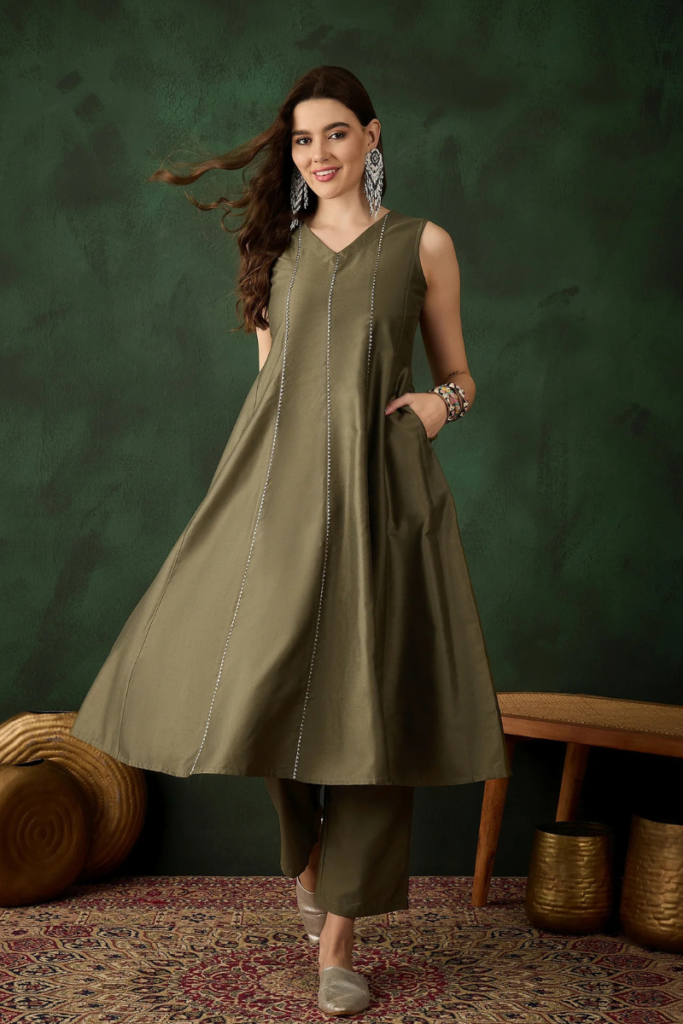
An A-line kurti gradually widens from the upper body toward the hem. Its balanced silhouette makes it suitable for many different occasions.
For example, cotton A-line kurtis work well for everyday outfits, while embroidered versions can suit festive events. Printed designs, meanwhile, offer an easy option for college and casual wear.
Straight-Cut Kurti
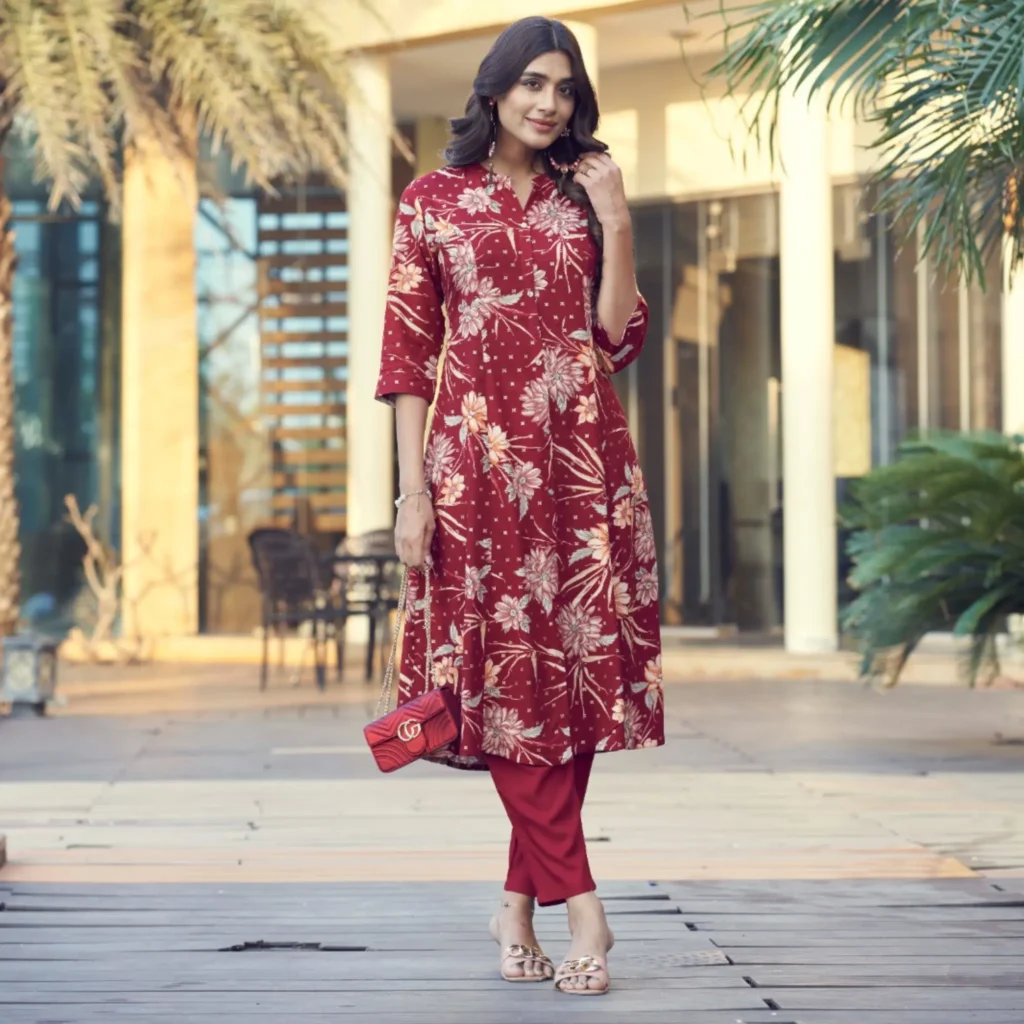
A straight-cut kurti maintains a relatively consistent width from the upper body to the hem. Unlike an Anarkali, it has little or no flare.
Because of its clean appearance, this style works particularly well for office outfits and everyday wear. Straight-cut kurtis also pair easily with cigarette pants, trousers, leggings, palazzos, and jeans.
Angrakha Kurti
An Angrakha kurti draws inspiration from traditional wrap-style garments. Its overlapping front creates a distinctive diagonal or cross-over effect.
Many designs also include tie-ups, tassels, embroidery, or traditional prints. Consequently, this kurti style can add a distinctly ethnic touch to festive and celebration outfits.
Flared Kurti
A flared kurti adds volume toward the lower part of the garment. Depending on the cut, the flare can start around the waist, hips, or lower section.
This flowing shape creates movement and gives the outfit a softer appearance. Therefore, flared kurtis work well for festivals, parties, celebrations, and casual outings.
Asymmetrical Kurti
An asymmetrical kurti uses an uneven hemline to create a contemporary appearance. The front and back may have different lengths, or one side may sit lower than the other.
For a modern ethnic outfit, this style pairs well with slim pants, leggings, trousers, or jeans. Furthermore, asymmetrical kurtis can transition easily between casual and semi-formal occasions.
High-Low Kurti
A high-low kurti features a shorter front section and a longer back section. This difference creates a distinctive silhouette without moving completely away from the traditional kurti design.
As a result, high-low kurtis are particularly popular for Indo-Western outfits. They can also work well for casual gatherings and parties.
Modern Types of Kurtis
Modern types of kurtis combine traditional Indian elements with contemporary cuts and styling details.
Shirt-Style Kurti
A shirt-style kurti combines the traditional shape of a kurti with details commonly found on shirts. These may include collars, button plackets, cuffs, or a structured fit.
For office and college outfits, this contemporary design offers a polished alternative to conventional ethnic wear. Meanwhile, printed or lightweight versions work well for casual dressing.
Kaftan Kurti
A kaftan kurti features a loose, flowing silhouette designed with comfort in mind. Its relaxed construction allows plenty of movement and makes it particularly suitable for warm weather.
Lightweight fabrics can make the style even more comfortable during summer. Additionally, prints, embroidery, tassels, and decorative borders can give a kaftan kurti a distinctive appearance.
Peplum Kurti
A peplum kurti typically has a fitted upper section followed by a flare around the waist or hips. This construction gives the traditional garment a modern shape.
For parties and casual celebrations, a peplum kurti can create a stylish Indo-Western appearance. Pairing it with trousers, palazzos, or slim-fit bottoms can further emphasize its contemporary silhouette.
Types of Kurtis by Length
Another way to understand the types of kurtis is by their length. Short and long kurtis can create very different looks even when they use the same fabric or print.
Long Kurti
A long kurti extends below the hip and may reach the knee, calf, or ankle. Designers can combine this length with straight, A-line, flared, or asymmetrical silhouettes.
Consequently, long kurtis offer considerable styling flexibility. They can suit everyday outfits as well as office, festive, and modest-fashion looks.
Short Kurti
A short kurti has a shorter hemline and generally works well with jeans, trousers, leggings, palazzos, or skirts.
For example, pairing a printed short kurti with jeans creates a casual Indo-Western outfit. Alternatively, traditional accessories can give the same kurti a more ethnic appearance.
How Do You Choose Between Different Types of Kurtis?
Choosing between different types of kurtis depends on the occasion, fabric, fit, length, comfort, and personal style.
For everyday use, cotton A-line and straight-cut kurtis offer a practical combination of comfort and versatility. On the other hand, office outfits often benefit from structured straight-cut or shirt-style designs.
When attending a wedding or festival, consider Anarkali, Angrakha, flared, or embellished kurtis. Their decorative details and flowing silhouettes can create a more traditional appearance.
For a contemporary Indo-Western look, short, asymmetrical, high-low, peplum, and shirt-style kurtis provide plenty of styling options. Pairing them with jeans, trousers, or skirts can instantly create a modern outfit.
During warmer months, breathable fabrics such as cotton and linen can improve comfort. Nevertheless, the fabric should also match the occasion and level of formality.
Popular Fabrics Used for Kurtis
The fabric is another important factor when choosing between different types of kurtis. Cotton, rayon, linen, silk, georgette, chiffon, Chanderi, and khadi are among the fabrics commonly associated with Indian ethnic wear. Each material offers a different combination of comfort, appearance, drape, and suitability for various occasions.
Cotton Kurtis
Cotton kurtis are popular for everyday wear because the fabric is lightweight, breathable, and comfortable. They work particularly well in warm weather and can be styled for college, casual outings, and daily activities.
For a simple everyday outfit, a printed cotton kurti can be paired with leggings, straight pants, palazzos, or jeans.
Rayon Kurtis
Rayon kurtis offer a soft feel and fluid drape, making them suitable for both casual and semi-formal outfits. The fabric can also carry printed designs well, which makes rayon kurtis available in a wide variety of colors and patterns.
As a result, rayon can be a practical option when you want a kurti with a smooth and flowing appearance.
Linen Kurtis
Linen kurtis are known for their lightweight feel and natural texture. They can make a comfortable choice for warm-weather dressing, particularly when you prefer a more understated and sophisticated appearance.
For office or casual wear, a simple linen kurti can be paired with straight pants or trousers.
Silk Kurtis
For festive and special occasions, silk kurtis can provide a more luxurious appearance. Their natural sheen and elegant drape make them suitable for celebrations, traditional events, and parties.
Depending on the design, silk kurtis can be worn with matching pants, palazzos, or a dupatta to create a complete ethnic outfit.
Georgette Kurtis
Georgette kurtis have a lightweight and flowing appearance. The fabric works particularly well with flared and Anarkali silhouettes because its drape can enhance the movement of the garment.
Consequently, georgette kurtis are often suitable for festive occasions, parties, and dressier ethnic outfits.
Chiffon Kurtis
Chiffon kurtis offer a lightweight and fluid look. Because the fabric drapes easily, it can work well for flowing silhouettes and layered ethnic outfits.
For a more complete traditional appearance, chiffon kurtis can be styled with a dupatta and coordinated bottoms.
Chanderi Kurtis
Chanderi is a traditional Indian textile associated with the town of Chanderi in Madhya Pradesh. Its lightweight texture and elegant appearance make it a popular choice for ethnic and festive clothing.
Chanderi kurtis can work particularly well when you want a traditional outfit with a refined and lightweight feel.
Khadi Kurtis
Khadi kurtis offer a distinctive handspun and handwoven textile character. The fabric is associated with India’s traditional textile heritage and is valued for its natural texture.
For casual and traditional outfits, khadi kurtis can provide a simple, understated appearance. They can also be paired with minimal accessories for a more relaxed ethnic look.
Which Kurti Fabric Is Best?
There is no single fabric that works best for every occasion. Instead, your choice should depend on weather, comfort, occasion, desired drape, and maintenance requirements.
- For summer and daily wear: Cotton and linen are practical choices.
- For soft, flowing styles: Rayon and georgette work well.
- For festive occasions: Silk and Chanderi can create a more elegant appearance.
- For lightweight flowing outfits: Chiffon and georgette are suitable options.
- For traditional styling: Khadi and Chanderi offer distinctive textile characteristics.
Therefore, when comparing different types of kurtis, consider both the silhouette and fabric. A cotton A-line kurti, for example, will provide a very different experience from a silk Anarkali or a Chanderi straight-cut kurti.
Frequently Asked Questions About Types of Kurtis
What does “kurti” mean?
A kurti is a traditional Indian upper-body garment, typically shorter than a full kurta, worn by women. It usually falls between hip and knee length and is styled with bottoms such as leggings, palazzos, jeans, or trousers. The word is derived from “kurta,” and modern kurtis blend traditional silhouettes with contemporary cuts and fabrics.
Which type of kurti is most versatile?
Among the different types of kurtis, A-line and straight-cut styles are particularly versatile. Their simple silhouettes make them suitable for casual, office, and semi-formal outfits. Moreover, changing the footwear, bottoms, dupatta, or accessories can create a completely different look.
Which type of kurti is best for office wear?
For a professional setting, straight-cut and shirt-style kurtis are practical options. Their structured silhouettes create a polished appearance, while simple prints and understated colors can maintain a professional look.
Which type of kurti is best for weddings?
When dressing for a wedding, Anarkali, Angrakha, and embellished flared kurtis are popular choices. Rich fabrics, embroidery, decorative borders, and statement accessories can make these styles more appropriate for festive occasions.
Which type of kurti is best for daily wear?
For regular use, cotton A-line and straight-cut kurtis provide a comfortable and versatile option. Simple prints and breathable fabrics make them especially practical for everyday dressing.
Can kurtis be worn with jeans?
Yes, kurtis can easily work with jeans. Short, asymmetrical, high-low, and shirt-style designs are particularly suitable for this combination. Together, these pieces create a relaxed Indo-Western outfit for casual occasions.
What is the difference between an A-line and Anarkali kurti?
The main difference lies in the amount and placement of the flare. An A-line kurti gradually widens toward the hem, while an Anarkali generally features a more pronounced and flowing flare.
What is the difference between a straight kurti and an A-line kurti?
A straight kurti maintains a relatively consistent width, whereas an A-line kurti gradually becomes wider toward the bottom. Therefore, the two styles create noticeably different silhouettes even when they use the same fabric.
Conclusion
The many types of kurtis — and the different kurti designs within each style — make this traditional garment suitable for almost every wardrobe and occasion. From elegant Anarkali and Angrakha designs to practical A-line and straight-cut styles, each silhouette offers a distinct combination of comfort and appearance.
For everyday and professional outfits, A-line and straight kurtis remain reliable choices. Meanwhile, Anarkali, Angrakha, and flared designs can add a festive touch to weddings and celebrations.
If you prefer contemporary fashion, short, asymmetrical, high-low, peplum, and shirt-style kurtis provide versatile Indo-Western options. Ultimately, the best choice depends on the occasion, fabric, fit, length, comfort, and personal preference.